


 Download Free (.pdf)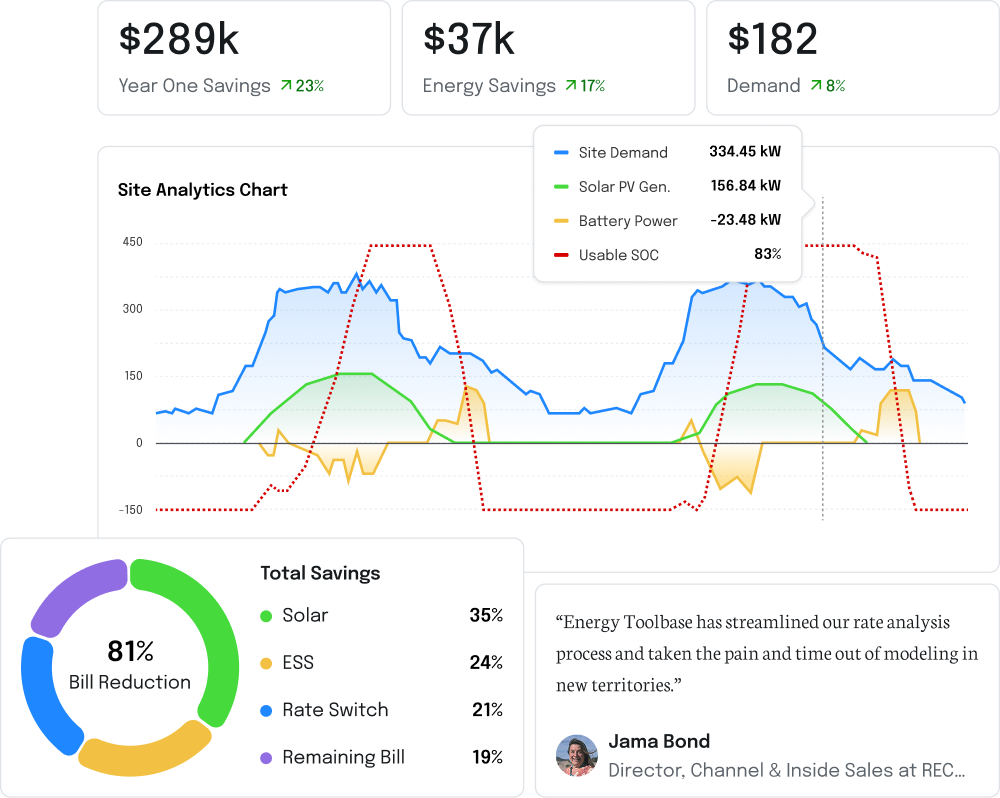
An Energy Management System (EMS) controller provides the smart, built-in functionality to pick up on emerging faults or inefficiencies in energy storage systems through advanced data analytics. This helps to avoid major outages, from failing inverters to degrading solar cells. However, there also needs to be a system to monitor the solar system’s performance to ensure the entire system is optimized efficiently.
This latest guide from Energy Toolbase walks through how solar monitoring improves maintenance and prevents high-cost failures, and the operational benefits of proactive fault detection.
EMS Controllers Explained
EMS controllers are focused on managing Power Conversion Systems (PCS) and Battery Management Systems (BMS). This ensures that those actions aren’t fixed or static, but rely on actual data and factors like energy prices, loads, and grid demand.
The key advantage is that an EMS controller enables intelligent decision-making about when and when not to use stored energy, delivering improvements in operational costs. For some organizations under pressure to lower emissions and meet sustainability targets, this is a vital way to reduce reliance on grid-supplied fossil fuels; for others, it’s all about resilience.
We’ve listed some of the primary advantages of using EMS controllers and shared insights into the measurable outcomes.
1. Cost Optimization
Conventionally, businesses paid higher demand charges during spikes in energy usage. An EMS controller removes those overheads by utilizing stored energy during peak periods, removing exposure to expensive demand charges by:
- Using peak shaving to reduce usage during high-cost periods and rebalancing discharges to achieve tangible cost savings
- Load shifting, where EMS controllers move usage to more cost-efficient periods, often overnight, storing energy when it is most beneficial to do so.
Importantly, these functions are automatic, meaning batteries charge and discharge at the most cost-efficient times without manual oversight.
2. Data-Based Intelligence
Making decisions based on historical data is never advisable, and tapping into accessible, accurate data is crucial for organizations seeking to reduce waste. Advanced EMS controllers like our ETB Controller don’t guess, and instead track:
- Energy usage patterns
- Battery performance metrics
- Up-to-date grid prices
The result is that, by replacing static settings with data-led, responsive controls, your EMS controller will ensure energy isn’t stored unnecessarily or discharged inefficiently, and will deliver smart energy management controls that eliminate waste caused by poor timing.
3. Real-Time Energy Visibility
Features like adaptive control algorithms don’t require manual instructions or technical know-how, as your EMS controller will automatically adjust to conditions. Responsive systems don’t wait for manual inputs to react to pricing changes or demand, and can predict the usage you’ll need in the hours or days to come, with load forecasting that can auto-reduce demand while also earning revenue.
4. Boosted System Longevity
Protecting the lifespan and value of energy storage assets is, of course, a necessity, and EMS controllers can help prevent excess wear and heat damage to your batteries through smart cycling. Predictive maintenance flags when an issue or developing fault first emerges, before it causes a serious failure, ensuring you can keep your energy systems in good condition without the constant risk of outages and downtime.
Access the Benefits of Advanced EMS Controllers
Investing in an advanced EMS controller simplifies and optimizes energy storage with a single, unified platform that can lower costs, boost resilience, and maximize the long-term value of your energy storage assets. Solutions like ETB Controller provide a comprehensive energy management system that delivers all the benefits explored here in a sustainable, financially efficient way.