 Download Free (.pdf)


California’s Resource Adequacy (RA) program is one of the most important and longstanding capacity procurement programs for commercial energy storage projects. Since 2006, the RA program has frequently provided a stable, long-term revenue stream that has helped make energy storage projects bankable.
Funding for the more recent Demand-Side Grid Support (DSGS) program is expected to run out by the end of 2026. RA remains a reliable and profitable DSGS alternative, especially when paired with other demand response programs like the Emergency Load Reduction Program. For developers building standalone storage or solar-plus-storage projects in California, understanding how RA works is critical to maximizing project value.
What is Resource Adequacy?
The RA program is a capacity market framework designed to ensure that enough electricity capacity is available to maintain grid reliability during periods of high demand. Under the program, utilities, community choice aggregators, and other load-serving entities (LSEs) are required to procure sufficient capacity resources to meet projected customer demand, plus a reserve margin. These organizations can satisfy their obligations by contracting with qualifying resources. These resources include battery energy storage systems, solar-plus-storage projects, conventional generation, and demand response providers. The program includes three key components:
- System RA: Capacity needed to meet overall statewide demand plus reserve requirements.
- Local RA: Capacity required within specific transmission-constrained areas.
- Flexible RA: Capacity capable of responding to changing grid conditions and ramping needs.
Battery energy storage systems are particularly well-suited to satisfy Flexible RA requirements. They can respond quickly to dispatch signals and deliver capacity precisely when the grid experiences rapid changes in net load when paired with sophisticated controls software.
Why Resource Adequacy Matters for Commercial Battery Storage
For energy storage developers, Resource Adequacy creates an opportunity to generate recurring revenue by selling a battery system’s dependable capacity to LSEs. In exchange for capacity payments, storage assets commit to being available when needed to support grid reliability. Because batteries can respond almost instantaneously to dispatch signals and help manage California’s growing renewable energy fleet, they are an increasingly valuable RA resource. As a result, RA revenues are often an important component of a battery project’s overall economic value, alongside energy arbitrage, demand charge management, and ancillary services revenues. That’s why we’ve created our own RA program that storage developers can model and enroll in.
How ETB’s Resource Adequacy Program Works
The ETB Resource Adequacy Program is based on CAISO’s RA framework in California. It enables commercial energy storage owners across CAISO territory to capture additional recurring revenue by making their battery capacity available to support grid reliability. Eligible sites can enroll year-round on either the 1st or 14th of each month. There are no minimum system size requirements. Program events are scheduled on a day-ahead basis with approximately 24 hours’ notice. They typically occur during the critical 4:00 p.m. to 9:00 p.m. reliability window. Depending on a system’s dispatch strategy and market conditions, events may be called as frequently as three times per week or as infrequently as once per month. Scheduling can also be aligned with predetermined price thresholds.
Participants receive both capacity payments, typically ranging from $40 to $60 per kilowatt annually. They also receive energy payments based on wholesale market rates during dispatched events. Payments are generally issued within approximately 60 days after the close of each participation month. For many battery storage projects, participation in the ETB Resource Adequacy Program can increase overall project value by an estimated 10% to 20%. This creates a meaningful additional revenue stream while helping support California’s evolving grid reliability needs.
How Energy Toolbase Makes Resource Adequacy Participation Easy
For many storage developers, participating in California’s RA market can be challenging due to regulations, compliance requirements, and administrative overhead. Energy Toolbase simplifies the process. We manage everything from enrollment and compliance reporting to asset optimization and revenue distribution.
To start, ETB Developer can model the ETB Resource Adequacy program’s revenue potential alongside your project’s energy savings and storage economics. Users can select the program from our list of available Grid Services program:
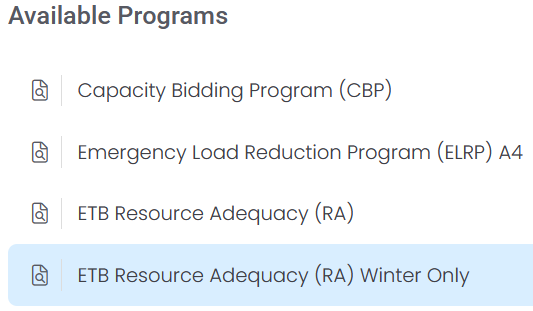
Then you can customize the program as needed by changing the bidding strategy, target window, and your capacity nomination.
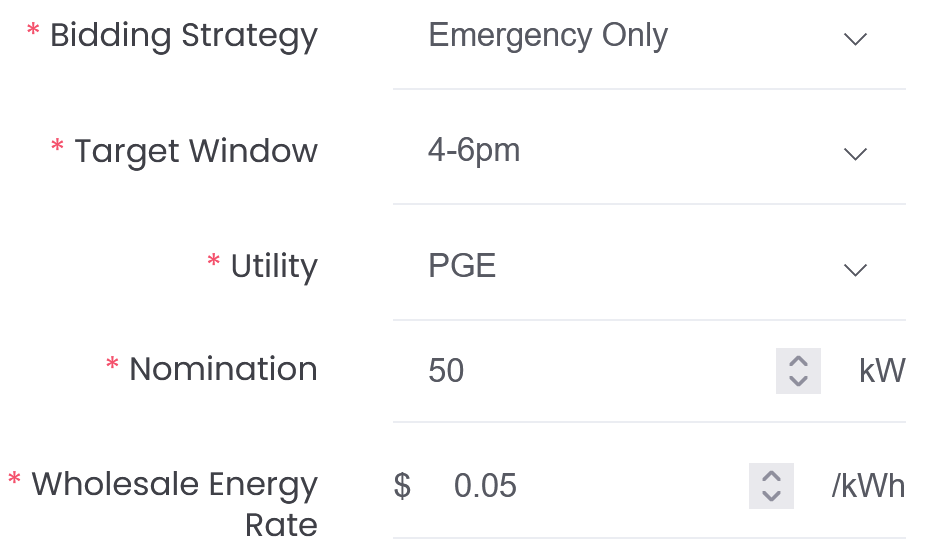
The bidding strategy, which dictates how frequently a site will be called to help with grid pricing, has two options: Emergency Only or Maximum Revenue. Customers who want to minimize dispatching and only participate in critical events and keep their clearing price high may opt for the Emergency Only option; otherwise, the Maximum Revenue strategy will prioritize participation in every event that gets called. Even if no event is called, participants still earn capacity incentives based on their nomination.
After modeling and enrolling in the program, ETB Controller uses AI-driven algorithms and real-time data to intelligently dispatch energy storage systems, ensuring maximum savings and revenue generation based on utility rates and market conditions.
We also make it easy to enroll your energy storage system in multiple programs. ETB Controller will prioritize participation in the most advantageous program at any given time. For California, this often means prioritizing RA during winter months and the Emergency Load Reduction Program during summer months to maximize program revenue.
As capacity markets and demand response programs evolve, California’s RA program continues to be a tried-and-true option for energy storage developers seeking additional value streams for their projects. Storage projects that are designed with RA participation in mind will be best positioned to capture value in this complex and dynamic energy storage market.
Looking to monetize your battery storage project’s capacity value? Get in touch with our experts to see how participation in our ETB Resource Adequacy Program can improve your project’s economics today.