 Download Free (.pdf)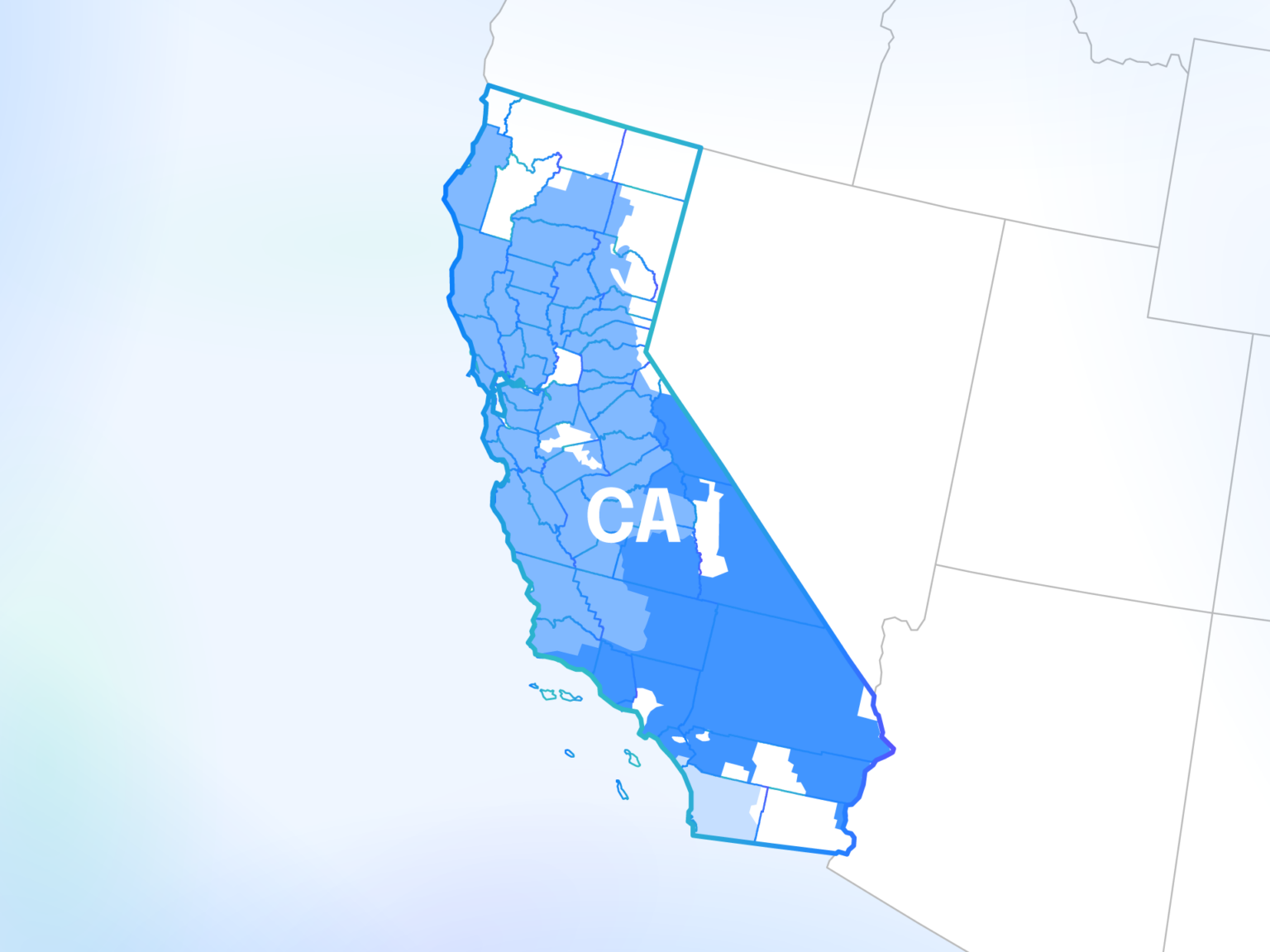

California’s battery energy storage market is evolving beyond traditional energy arbitrage revenues. One often-overlooked opportunity for distributed and behind-the-meter storage developers is participation in California’s Capacity Bidding Program (CBP), a demand response program that compensates flexible resources for reducing grid load during periods of high system stress. For commercial energy storage developers, understanding how CBP works can improve project economics by opening the door for new value streams otherwise not possible.
What Is the Capacity Bidding Program?
The Capacity Bidding Program is a statewide demand response program offered through California’s major investor-owned utilities, including PG&E, SCE, and SDG&E, as well as community choice aggregators. The program allows aggregators to assemble customer portfolios and commit a specified amount of load-reduction capacity that can be called upon during grid events.
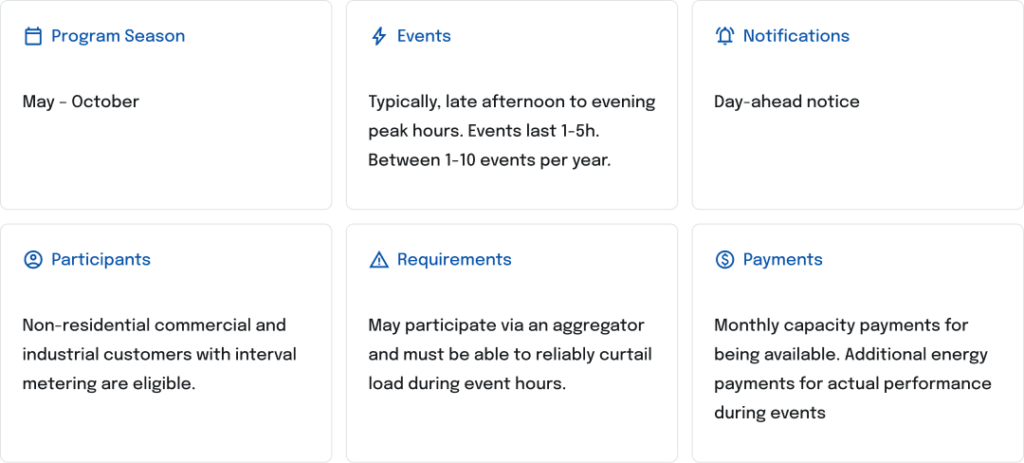
When an event is triggered because of high electricity prices, limited supply, or grid reliability concerns, participating resources are dispatched to reduce net load. Aggregators receive capacity payments based on committed capacity and additional energy payments tied to actual performance during events.
How the Program Works
Under CBP, participants submit monthly capacity nominations, or bids, indicating how much load reduction they can provide if called upon. Participants are notified of events on a day-ahead basis, with events typically occurring during peak hours and lasting from one to five hours.
Event participants will not be required to reduce load for more than one event per day or for more than 24 hours per month.
For PG&E and SCE, these events are limited to:
- 5 p.m. to 10 p.m. in May
- 4 p.m. to 9 p.m. from June to October
For SDG&E, these events are limited to:
- 1 p.m. to 9 p.m. in all program months
CBP Compensation
There are two types of compensation: capacity payments and energy payments. Capacity payments are based on the load reduction amount that participants submit, and these payments vary depending on the capacity price for that month. Even if no events are called in a given month, participants will still receive capacity payments simply for their commitments, so it pays to participate.
Energy payments are only earned based on a participant’s actual energy reduction during an event. If no events occur in a month, then there are no energy payments. There are penalties for participants who fail to meet their capacity commitments during an event, which means it’s important to ensure that your capacity commitment is reasonable and attainable, and that you partner with a reliable aggregator. However, the program is flexible by allowing participants to change their capacity nominations each month.
Why Energy Storage Is a Strong Fit
Energy storage systems are positioned to perform well in CBP because they can provide fast, predictable, and measurable load reductions. Compared with traditional load-curtailment strategies, batteries offer several advantages, including:
- Reliable Event Performance: Commercial customers may be reluctant to reduce production or curtail operations during peak grid events. Batteries enable participation without disrupting business processes, providing more predictable event performance and lower performance risk.
- Predictable Capacity: Unlike behavior-based demand response resources, storage systems can be dispatched with a higher degree of certainty. This predictability is valuable for aggregators seeking dependable capacity commitments.
- Revenue Stacking Possibilities: CBP revenues can complement other storage value streams such as demand charge management, time-of-use arbitrage, backup power services, virtual power plant participation, and resource adequacy contracts where allowed by program rules and market structures.
How Energy Toolbase Can Assist with CBP
We can help you model, enroll, and optimize your battery assets for participation in CBP. You can use ETB Developer to model CBP with your projects to determine if your site meets the size and load curtailment requirements. ETB Developer offers several options to customize the program, including specifying your capacity nomination and the energy rate for compensation.
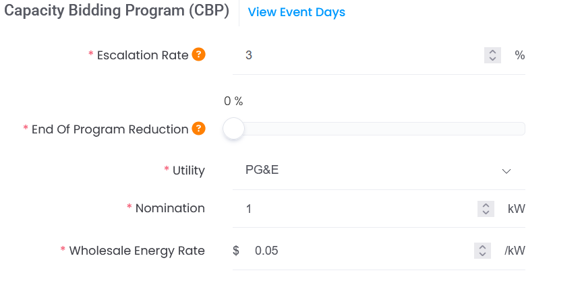
Then you can directly enroll in the program with ETB Controller to schedule your battery dispatches during events and provide you with day-ahead event notifications. Our intelligent controls software ensures that your system is performing up to the standards of the program and optimizes it for the highest payback. Lastly, ETB Monitor displays insights into system performance and demand response payments while keeping track of program events.
The CBP program, along with several other demand response programs in California, is now available for modeling and enrollment in ETB Developer. Get in touch with our team of experts to get started today. Get in touch with our team of experts to get started today.