 Download Free (.pdf)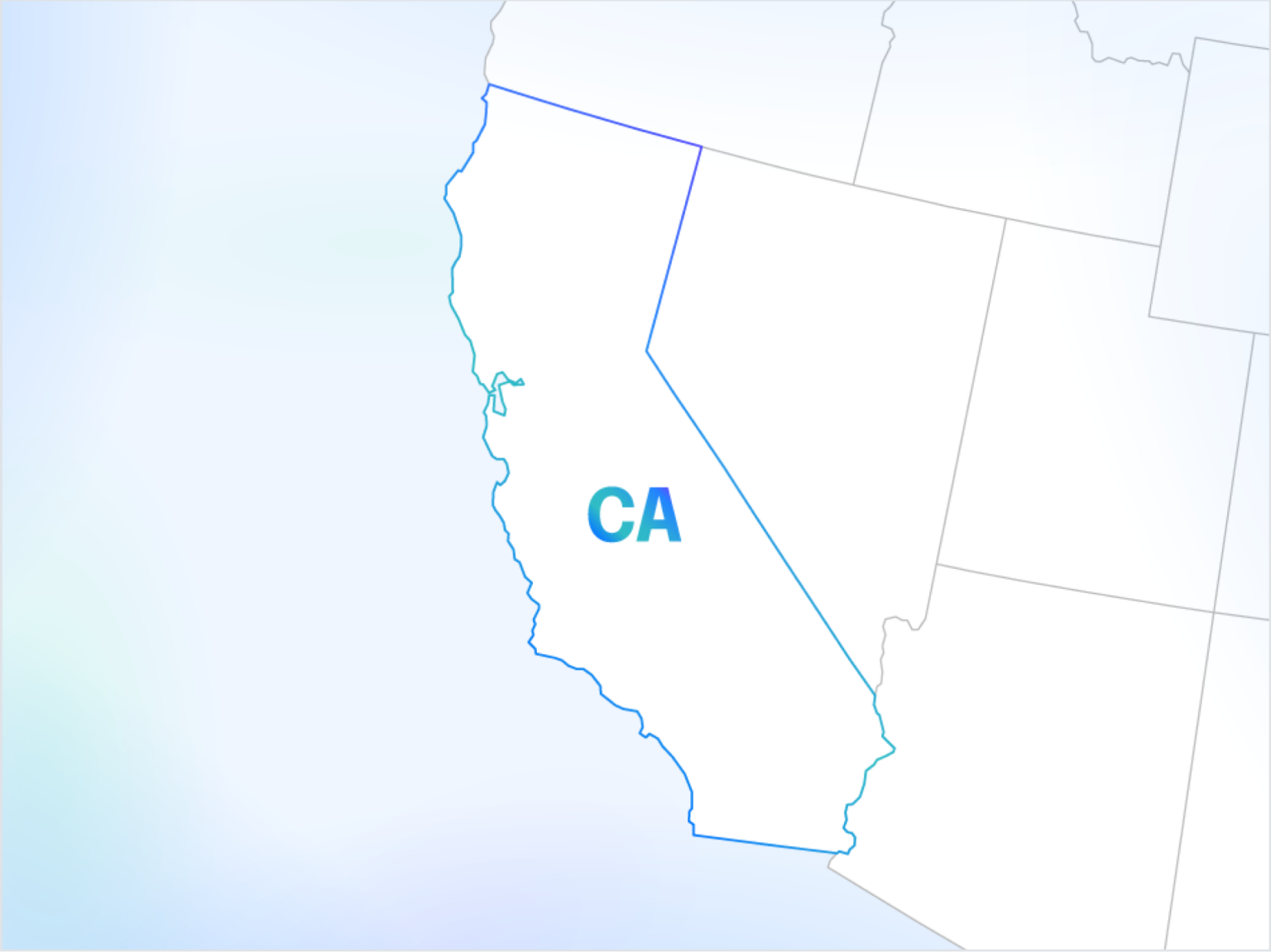

California’s battery energy storage market continues to expand beyond traditional energy arbitrage and demand charge management. For developers looking to unlock additional value from behind-the-meter storage assets, the Emergency Load Reduction Program (ELRP) presents an additional revenue opportunity. Especially as California lawmakers recently ended funding for the Demand Side Grid Support (DSGS) Program.
Designed to support grid reliability during emergencies, ELRP pays customers and energy storage assets for reducing electricity demand or exporting stored energy during electrical grid emergencies. For battery storage developers, participation in ELRP can create an additional revenue stream while helping strengthen grid resilience.
What Is the Emergency Load Reduction Program?
The ELRP is a demand response initiative administered by California’s investor-owned utilities, including Pacific Gas & Electric, Southern California Edison, and San Diego Gas & Electric. The program was designed as a pilot to reduce the risk of grid outages during periods of extreme system stress.
Unlike other demand response programs that may be called for economic reasons, ELRP is activated only during emergency grid conditions. When an event is called, participants are compensated based on their measured load reduction or energy delivered to the grid.
How the Program Works
ELRP events typically occur between May and October, when California experiences its highest electricity demand and greatest grid reliability challenges. An ELRP event can last for a minimum of 1 hour to a maximum of 5 hours. Event notifications are generally provided day-ahead, although same-day notification may occur during emergencies.
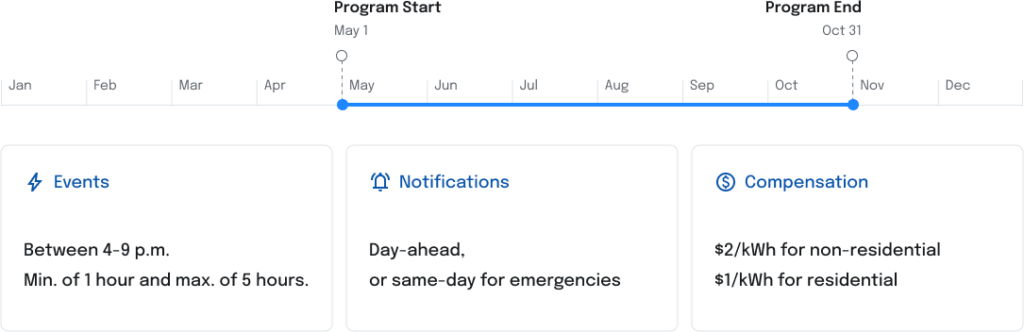
Most events are scheduled during peak demand periods, typically between 4:00 p.m. and 9:00 p.m., and are only called when the grid requires emergency support. Battery systems can participate by exporting stored energy and reducing site load through battery discharge.
ELRP Compensation
Unlike capacity-based programs like the Capacity Bidding Program, ELRP compensation is primarily performance-based. Participants are not required to make monthly capacity commitments and are paid based on measured load reduction or battery discharge performance during emergency events. The amount of reduced load is measured relative to the customer’s typical consumption leading up to the event.
ELRP participants are compensated for load reductions at a rate of $2 per kWh for non-residential customers and $1 per kWh for residential customers. Participants are not penalized for failing to reduce energy consumption during event windows, making participation even easier.
Why ELRP Is Attractive for Energy Storage Developers
Energy storage systems offer several advantages that align closely with ELRP participation. Batteries can respond quickly and predictably during event windows. Unlike traditional load curtailment strategies that depend on operational changes at customer facilities, battery dispatch can be automated and optimized to deliver reliable performance during event hours.
Also, ELRP revenue can often be stacked with other value streams like:
- Demand charge management
- Time-of-use optimization
- Resource adequacy and virtual power plant programs
- Other California demand response opportunities where permitted
This revenue stacking capability can significantly improve overall project economics and shorten project payback periods. The ELRP program can also serve as a DSGS replacement or program alternative now that the program is no longer being funded.
How Energy Toolbase Can Help
Energy Toolbase streamlines ELRP participation from project modeling to operational dispatch through our full product suite. We support you at every step of the process, including program selection, enrollment, event participation, and revenue distribution.
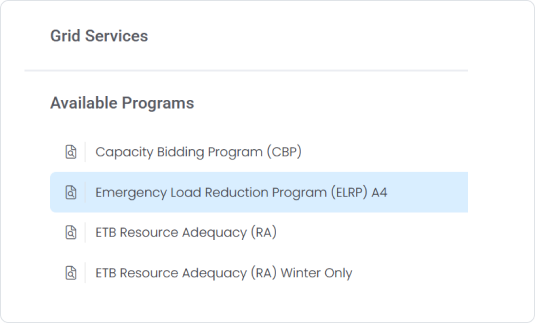
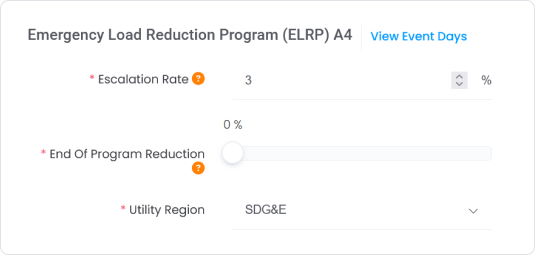
Using ETB Developer, developers can evaluate ELRP revenue opportunities during project design and analyze how emergency event participation impacts overall system economics. The program is very simple to model with minimal inputs necessary:
Once a project is operational, ETB Controller can automate battery dispatch during ELRP events, receive utility or aggregator notifications, and optimize battery performance to maximize event revenue.
Through ETB Monitor, customers and asset owners can track system performance, event participation, program compliance, and revenue generation.
For developers evaluating battery storage opportunities in California, ELRP should be considered alongside traditional use cases such as demand charge reduction and energy arbitrage. When properly modeled and automated, participation in ELRP can unlock an additional revenue stream to improve your project’s economics.
Interested in modeling ELRP revenue for your next project? Get in touch with our Energy Toolbase team to learn how our product suite can streamline demand response enrollment, participation, and performance optimization.