 Download Free (.pdf)

*The contents of this blog were updated on March 26, 2026.
As solar PV adoption grows, one of the biggest challenges for homeowners and businesses is ensuring that the savings from their systems remain stable over time. Utility rate changes, evolving Net Energy Metering (NEM) policies, and time-of-use pricing can all erode the financial value of solar.
This is where future-proofing energy storage becomes critical. By pairing a battery energy storage system (BESS) with solar PV, customers can protect their long-term savings while unlocking additional ways to optimize energy usage and reduce utility bills.
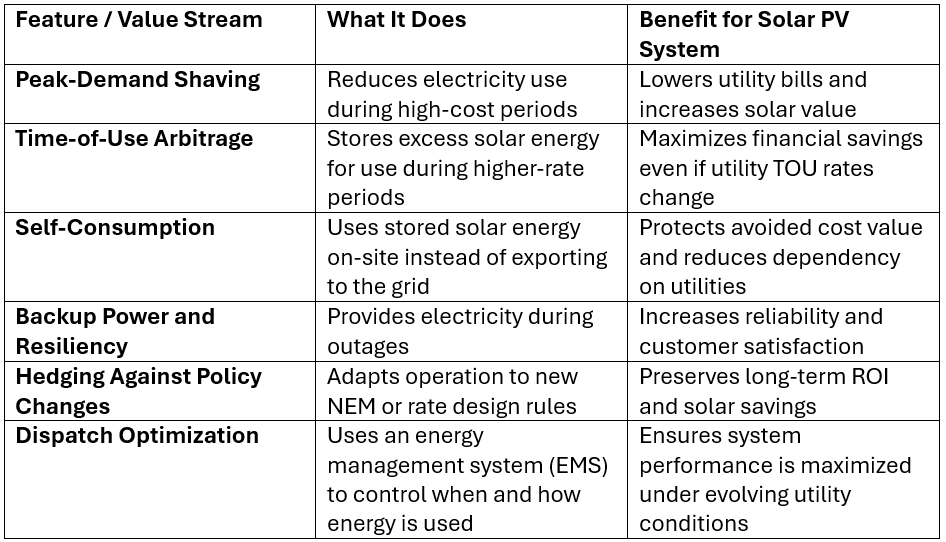
A battery energy storage system provides multiple value streams, including peak-demand reduction, time-of-use arbitrage, and self-consumption. These features allow storage to adapt to changing electricity rates and policy frameworks, ensuring that solar PV systems continue to deliver strong financial returns even as the regulatory landscape shifts.
For solar and energy storage developers, highlighting the ability of storage to future-proof energy savings is a powerful selling point. Customers are increasingly looking for solutions that not only provide immediate ROI but also hedge against potential reductions in solar value over time.
By demonstrating how a BESS can preserve savings, optimize energy use, and provide resilience, developers can position energy storage as a strategic and essential complement to any solar installation.
Solar Economics Are Eroding
Across the US, electric utilities are revising utility rate designs and NEM frameworks. According to the 50 States of Solar Report from the NC Clean Energy Technology Center, forty-one states took action on distributed solar policy or rate design in Q3 2017 alone. While the specifics vary by state and utility territory, the common result is often a reduction in the financial value of solar.
For example, San Diego Gas & Electric implemented new time-of-use (TOU) rates in December 2017. The on-peak period, previously 11:00 to 6:00 PM, shifted to 4:00 PM to 9:00 PM.
This change devalues afternoon solar production, which now falls into a mid-peak rate instead of the premium on-peak rate. Similar TOU adjustments have been proposed by Pacific Gas & Electric and Southern California Edison, further illustrating the need for solutions that protect solar economics.
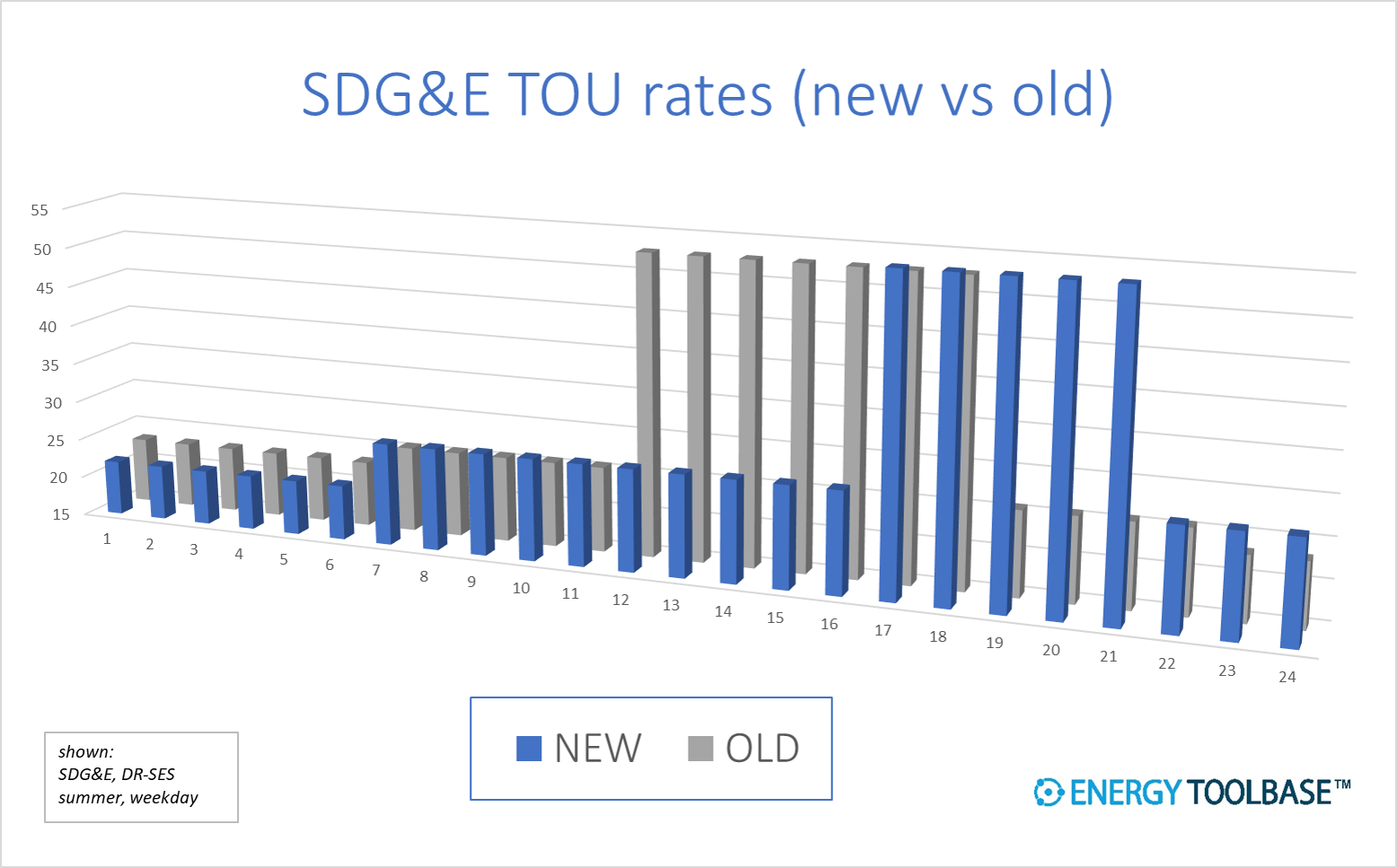
Note: in California, both Pacific Gas & Electric (PG&E) and Southern California Edison (SCE) have proposed similar TOU window shifts in their most recent General Rate Case filings, which are likely to get adopted in 2018.
How a Battery Energy Storage System Future-Proofs Solar PV Savings
Modeling ESS to Protect Solar Savings
Quantifying the impact of rate design or NEM changes (and determining how storage can mitigate losses) requires project-specific analysis. Factors include:
- Customer load profile
- System size and production
- Applicable utility rate schedule
- Specific policy or rate changes being implemented
Developers can use modeling tools like ETB Developer to simulate how an energy storage system can future-proof solar PV savings, showing customers the value of pairing ESS with their solar systems. Energy Toolbase also offers tutorials and software that guide users through this type of analysis, providing accurate projections of savings under various scenarios.
Turning Market Threats Into Opportunities
Utility rate and NEM changes often reduce solar’s avoided cost, but these challenges present a unique opportunity for storage. ESS can be programmed to optimize savings under evolving utility structures, making storage a powerful hedge against policy-driven erosion of solar economics. An EMS like ETB Controller can maximize the value of an ESS by utilizing real-time data to prioritize the most optimal dispatch strategy at any given time.
Savvy solar and energy storage developers leverage this adaptability as a key sales strategy. By demonstrating how storage can preserve solar PV savings, developers can provide a compelling case for ESS adoption, even in markets where traditional ROI alone may not justify the investment. Storage effectively transforms uncertainty in policy and rates into a marketable benefit, giving developers a competitive edge while protecting their customers’ long-term energy savings.
Final Thoughts
- ESS provides multiple value streams beyond solar, including peak-demand reduction, arbitrage, and self-consumption.
- Future-proofing is a critical selling point: storage can mitigate the effects of changing utility rates and NEM rules.
- Modeling and analysis are essential: project-level specifics determine the savings storage can provide.
- Developers can turn policy changes into opportunities by highlighting storage’s ability to preserve solar economics.
By combining technical modeling with a clear value proposition, developers can position ESS not just as an optional upgrade, but as a strategic tool for long-term energy savings and financial resilience.