 Download Free (.pdf)

As solar and energy storage projects become more complex (and margins tighter) the quality of data used to model system performance matters more than ever. Among the many pieces of data developers must sift through, one of the most important data inputs for solar and energy storage models is interval data: high‑resolution measurements of electricity consumption and generation. For solar and energy storage developers, especially those focused on commercial and industrial (C&I) projects, interval data can help you capture a true estimation of value for your solar and energy storage systems.
What Is Interval Data?
Interval data from an electric utility consists of detailed measurements of energy usage (kW, kWh, W, or Wh) recorded at specific intervals, usually every 15-, 30-, or 60- minutes, using a smart meter. This data is typically provided to customers in Excel, CSV, or XML formats. Unlike monthly electric bills, which only show total energy consumption for the entire billing period, interval data offers a granular view of when energy is used or produced during every interval of each day.
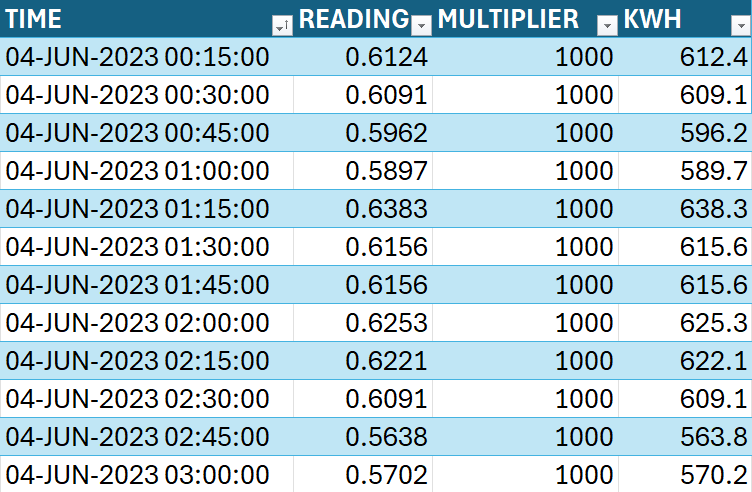
This detailed insight into a customer’s energy usage is key because the value and performance of solar PV and ESS depend not only on the total amount of energy, but when the energy is produced, consumed, and priced.
Improved Rate and Tariff Modeling
Most modern rate schedules are transitioning away from simple fixed-rate $/kWh averages to time-differentiated options that include time-of-use (TOU) charges, coincident peak pricing, seasonal structures, real-time pricing, and more—all options that price energy based on when it is consumed.
Regular utility bills work for a quick and simple analysis of a basic rate plan, but any complexity in the rate schedule will require interval data to provide the granular insight needed to model your projects accurately. Two different customers with the same total energy usage in a billing period could have very different load profiles and bill totals depending on what time of the day the energy was consumed. Without interval data, all kWh are treated equally, peak energy is undervalued, and demand charge savings are unrealistically averaged across the billing period, so you’d never know where the real opportunities lie.
Rate switches are another opportunity to consider when working on a solar and energy storage project. Switching from one rate schedule to another can provide significant savings if done correctly. If a customer with high demand charges can switch to a more energy-centric rate schedule, or vice versa, then there’s potential for savings there. However, rate switching requires a detailed and accurate load profile, which is best created using interval data.
We make it effortless to model rate switches in ETB Developer. Simply select your rate schedule, upload interval data to create a load profile, then select a rate schedule that is available for a switch to see whether the current or new rate will provide greater savings.
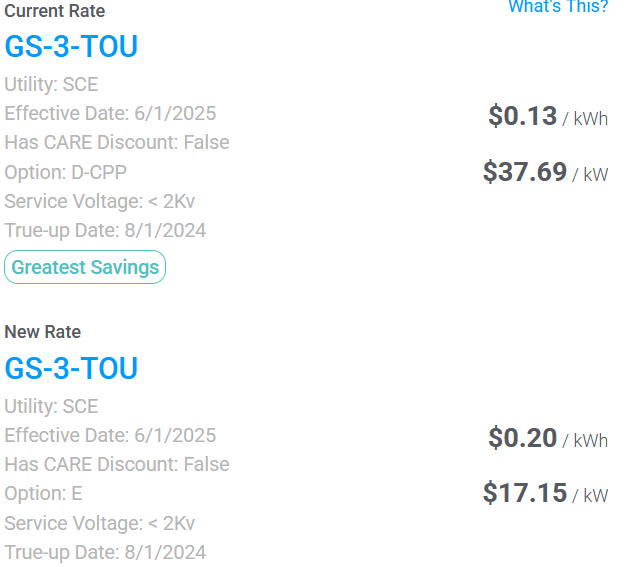
Interval data allows you to create a realistic load profile, model it under multiple rate schedules, and see which option provides the best fit for your project.
Better Solar Production and Load Alignment
For solar PV modeling, interval data allows developers to precisely quantify how much on‑site generation can be directly consumed behind the meter versus exported to the grid. This distinction is critical in markets with declining net energy metering compensation or complex export rules.
A flat monthly average load may suggest high solar self‑consumption, while interval data could reveal midday load dips that force excess solar exports at lower rates. Having interval data on hand can reveal if solar is producing when the load is high or if excess solar is occurring during low-value hours.
By modeling solar production against actual load shapes, developers can appropriately size systems, forecast bill savings more accurately, and present customers with precise projections.
Unlocking the Full Value of Energy Storage
Battery economics are driven almost entirely by timing. Batteries derive much of their value from TOU arbitrage—charging during lower-priced periods and discharging during higher-priced hours to reduce costs or increase revenues. Without the granular visibility that interval data provides, that value is almost impossible to target or quantify accurately.
For C&I projects, interval demand data reveals high impact moments like:
- Peak demand timing and duration, which directly affects demand charge reduction strategies
- Coincidence of peaks with solar production, informing solar‑plus‑storage dispatch
- Frequency of short spikes vs. sustained peaks, which determines optimal battery power and energy ratings
Interval data can reveal opportunities to unlock multiple value streams like demand charge reduction, energy arbitrage, grid services, and more. Our ETB Controller energy management system excels in value stacking by using Acumen AI™ to autonomously prioritize the greatest value stream for your solar and energy storage assets at any given time. And we make it incredibly easy to use interval data in ETB Developer.
How ETB Developer Simplifies Modeling with Interval Data
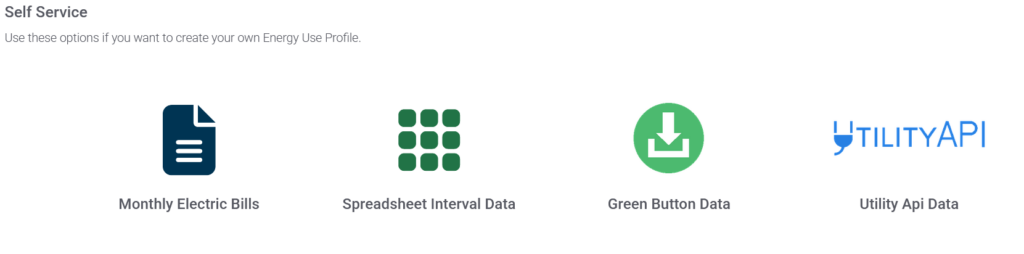
It is incredibly easy to work with interval data in ETB Developer. ETB Developer users who have interval data can upload it in the Energy Use Profile, or they can use the Green Button API or Utility API to fetch the data from the utilities:
A crucial step that is sometimes overlooked when working with interval data is ensuring that the data is clean and orderly. Oftentimes, there are gaps or repetitions in the data that need to be filled or removed, and these discrepancies occur around daylight savings time. When uploading your interval data, we provide a step-by-step guide that walks you through how to clean up your interval data.
Once your interval data is cleaned and uploaded, you know that you’re modeling with the most accurate load profile possible.
As solar and energy storage opportunities expand, competitive advantage comes from having the most accurate and detailed project proposals as possible. The value of interval data comes from revealing when energy is used, produced, and valued, enabling better system design, more accurate project pricing, and savings estimates clients can trust. And with the help of ETB Developer, you can create winning proposals that’ll help you close more deals.