




 Download Free (.pdf)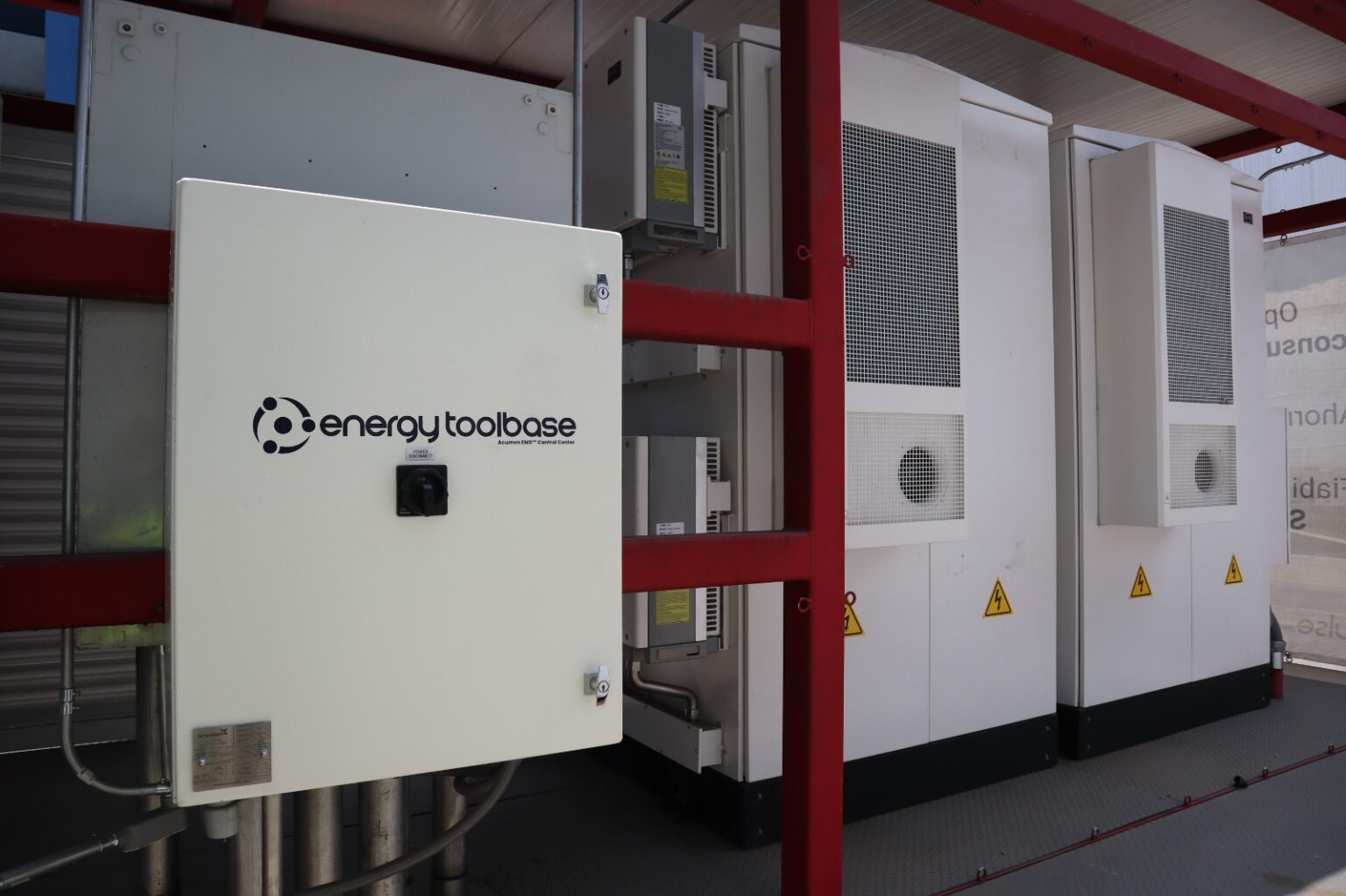

A smart energy management system controller offers compelling benefits, combining automation, data-driven decision-making, and performance optimization, without the limitations of controllers confined by fixed rules.
Rather than operating on static strategies or relying on manual instructions, intelligent controllers incorporate a huge range of capabilities like predictive modelling and real-time data analytics, optimizing energy systems and storage automatically. Automation in modern energy storage controllers is a powerful feature and unlocks improvements in performance that basic or conventional systems simply cannot provide, using smart controls to deliver value.
What Is a Performance-Based Energy Storage Controller?
The key emphasis of an intelligent EMS controller is to step away from predefined rules or schedules that aren’t necessarily ideal (such as single objectives or rule sets) and to remove all the complexity of renewable energy asset management software. Advanced controllers act like a performance-boosting and financial efficiency tool, providing outcomes that include:
- Reductions in peak demand charges
- Intelligent market and program participation
- Constant re-evaluations of value streams
For businesses and organizations, this means energy storage batteries work harder and smarter, reducing energy costs, improving uptime and preserving battery life, and reacting instantly to changes in markets, tariffs, or demand. Energy managers can allow their systems to operate independently, with the peace of mind of a lower administrative burden and predictable results, while also scaling across multiple or growing sites as needed.
Below, we’ve run through some of the benefits to be aware of if you’re considering upgrading to our ETB Controller or want to know the real-world advantages of an advanced controller.
1. Improved Operational Efficiency
Conventionally, energy storage has been seen as an operational management task, but with more dynamic, less centralized energy markets, smart controllers turn this into a performance-optimization opportunity. Instead of systems that operate as they’re told, advanced controllers actively deliver value with lower risks, less time burden, and less reliance on manual scheduling and human supervision.
Reacting quickly to market volatility is essential, and automation enables systems to respond in real time to spikes in prices, grid signals, tariff fluctuations, and unexpected changes in demand.
2. Longer-Term Returns on Investment
Software and hardware that reach the end of their useful life quickly can make energy storage management costly, which is why protecting assets from deterioration and extending battery longevity matters. Smart energy storage controllers reduce wear and boost ongoing ROI by optimizing charge and discharge cycles and managing discharge depths to avoid any unnecessary degradation.
In everyday terms, these solutions improve performance while also preserving the lifespan of energy storage assets.
3. Scalable Management for Multiple Sites
An intelligent EMS controller can support energy storage management across sites and compounds of all sizes, as well as multi-site organizations that need to optimize energy usage across a whole portfolio. Managers benefit from centralized, coordinated monitoring in one place and standardized performance enhancements across the board.
4. Future-Proofing Energy Infrastructure
Energy storage systems are, of course, becoming increasingly complex, and advances in energy storage management technology can make it difficult for organizations to make confident, long-term decisions. Advanced controllers equipped with AI-enabled analytics eliminate concerns about systems becoming obsolete, using next-gen intelligence with the agility to adapt to changing regulations and remain competitive as energy markets shift.
5. Performance Visibility and Data Transparency
A big stumbling block of non-automated and strategy-based energy storage controllers is that they operate in a silo, or within a black box, without managers being able to see how systems are performing and where there is room for improvement.
Analytics enables decision-makers to track how well they’re meeting operational and financial goals, monitor performance indicators, use accurate output benchmarking, develop precise forecasts, and compare current and historical data to inform their strategies.
How Our ETB Controller Makes Energy Storage a Strategic Advantage
ETB Controller with Acumen AI™ from Energy Toolbase turns energy storage batteries from passive assets into revenue-generating systems through the combination of automation and real-time optimization. Often used in conjunction with other products in our software suite, it ensures your energy management systems are doing what they should, in the most cost-efficient and performance-enhancing way possible.

