

 Download Free (.pdf)
Economic modeling is an integral part of commercial energy storage projects. It plays a central role in decision making for investors, as it can instill confidence in ROI and give facility managers a clear view of future expenses.
Predicting these impacts isn’t easy. Utility rates can vary from one region to another, energy use at each location can change throughout the year, and battery storage on its own introduces a number of variables, from charge and discharge schedules to lifespan varying across new and old technology.
Modeling the impact of energy storage projects requires precision in several aspects (utility rates, energy use, and battery dispatch strategy) so developers can accurately estimate costs, forecast savings, and determine the long-term value of a project.
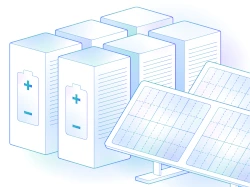
Solar + Storage Project Economics
Today, energy storage modeling software needs to be complex and accurate in modeling battery storage in simulations and conducting energy storage project feasibility assessments. Quality economic modeling starts with precise and up-to-date information. The following inputs are key:
- Utility rate structures, including different baselines across geographic regions and how charges change based on demand
- The expected output of the project
- Battery dispatch that predicts when stored energy will be used
- Available grid programs the project is able to participate in
- Electricity usage patterns spanning enough time to provide an accurate understanding of the profile
Accurate modeling requires a powerful system to gather and correlate this data, but what happens next is even more important: putting it in context.
Tying It Together
Modeling the economic impact of storage projects requires parsing each piece of necessary data on its own and also understanding how they relate to each other. For example, there are often demand charges applied to bills based on the maximum power a consumer uses during a billing cycle. Utilities do this in an attempt to even out energy usage over time by incentivizing their customers to not use electricity in massive spikes.
If an energy storage system can store sufficient energy to discharge when a factory is about to consume electricity far above their average use, they can reduce their demand charge by supplementing that energy with stored power. By reducing the energy surge demanded of the commercial utility, the entire energy bill is reduced.
This simple act requires a complex application of data. The modeling system must have a detailed analysis of historical energy use so it can predict these spikes, it has to track battery storage and capacity, and it must create a schedule that makes sure these things overlap in the way most beneficial to the company.
This is why powerful software is so important to getting the most out of energy storage projects and for helping companies understand the benefits storage offers.
Aligning Modeling and Application
Economic modeling is a necessary part of the design phase for storage projects. When it’s done right, it can illuminate the possibilities of storage and the savings it can yield. Unfortunately, after this comes installation and the reality of operations.
A facility’s energy use may change, utility rates may change, and battery lifespan and storage capacity may change. Modeling is important up front, but monitoring is necessary throughout. Quality energy storage software provides:
- Economic modeling tools to collect data and estimate savings and costs
- An EMS controller to oversee battery operations
- Monitoring systems that collect data that analyze performance and savings in real time
These tools are all necessary for a successful storage project. The smallest changes can shift performance, and companies need to know when it’s happening and why so they can respond accordingly and know when the real-world application is separating from predictions. The best tools, like those offered by Energy Toolbase, will provide insight and guidance from beginning to end.
The Energy Toolbase Way
Our suite of tools gives you everything you need to implement a solar and energy storage project from beginning to end. Pulling from a range of analytics, our ETB Developer uses data-driven insights to explain exactly how solar and energy storage can benefit specific facilities. Schedule a call with our experts today to see how we can help you model economic impact accurately for you and your clients.